Signage Solutions That Market Your Mixed Use Development
Developers, architects or property owners looking to capitalize on the live-work-play trend, should consider the key role signage plays in promoting, directing and informing patrons of mixed use developments. From choosing the right sign partner to design considerations. Put signage to work.
Why The Love For Mixed Use Developments?
Developers, architects or property owners looking to capitalize on the live-work-play trend, should consider the key role signage plays in promoting, directing and informing patrons of mixed use developments.
Mixed use developments or “mini-communities” are being praised for their benefits like reduced traffic and pollution by allowing residents to use their cars less while also boasting low vacancy rates and high-quality tenants.
These developments add value to an investor’s portfolio, provide built-in clientele for commercial businesses, and offer convenience for homebuyers, it can become a point of attraction and entertainment within urban areas or suburbs.
Zoning requirements in many large cities are being proposed or are already passed, to accommodate and encourage these types of developments.
“Des Moines’ proposed zoning code update aims to transform neighborhoods into walkable areas with a mix of high-density, affordable housing, and commercial spaces. It allows for easier and quicker construction, which in turn, could result in more development across the city,” the Des Moines Register reported in a September 4th, 2019, article.
“Under the proposed new code, several areas would be re-classified as ‘mixed use,’ allowing for apartments on the upper floors of retail shops, office space, and other commercial buildings.”
As promising as this sounds, there are certain aspects of a mixed use development that can be challenging despite the potential. In marketing such locations, it’s important to devote attention to the overall design, the location, and the tenants. But most importantly, finding ways to drive business to the area will determine the success of the project.
How Do I Put My Signage To Work?
Drawing the attention and patronage to a mixed use development is in part due to signage solutions. Here’s a nod to some recent projects.
In February of 2019, the R&R Westfield campus in West Des Moines opened. For this project, the developer’s designer and signage partners collaborated on the design that was then manufactured and installed which helped achieve 80% occupancy in under a year. The branding and unique identity of each component of the mixed use development played a huge role in that accomplishment.
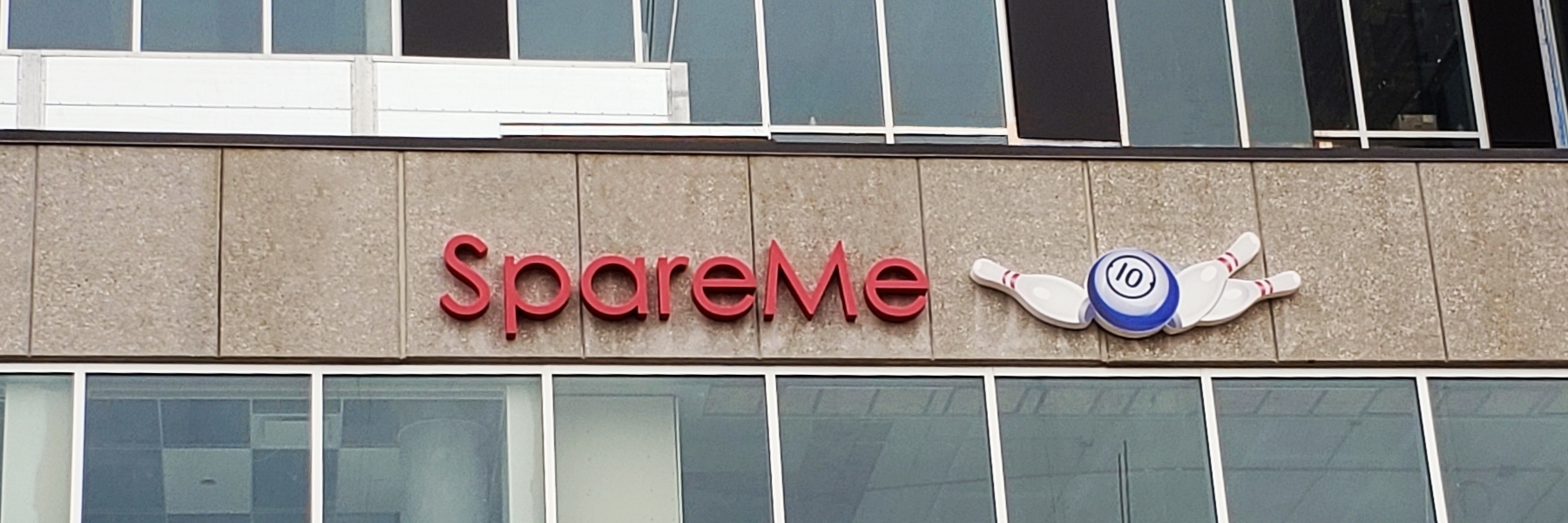
Work is currently being wrapped up on The Chauncey in Iowa City. The mixed use project at College and Gilbert streets is a $57 million high-rise, which includes a movie theatre, bowling alley, hotel, restaurant, coffee shop, community and office space, and condos. Unique signage was developed in a few different locations, each with its own distinct challenges, within the landmark building, including:
FilmScene – a state-of-the-art three-screen, non-profit cinema
Donor Wall — a unique tribute to the theatre’s benefactors
Boutique, Luxury Hotel — a 15-story building with fifth-floor roof terrace
In both R&R Westfield and The Chauncey, there were certain instrumental aspects of signage development that help market these locations to the public. If you’re procuring signage for a mixed use development, addressing each one of these could help make your project more profitable in the long-run.
What Signs Are Best?
With mixed use spaces, although there are a variety of tenants, the businesses need to make sense together. This allows each to boost the other’s value. For example, a grocery store would be a welcome addition for homeowners in adjoining condos. Add in other amenities and you’ve achieved the goal of a mixed use: to create a mini-community.
The signage should have that same cohesive quality to it. In addition to a complimentary design from sign to sign, which creates the same look and adds to the community feel, you’ll want to consider the type of businesses and hours of operation within your mixed use development. For instance, will they be open at night and need illuminated signs?
Mixed use developments are often used as a way to revitalize a neighborhood; signage can reflect and bring to life the character of the community. With The Chauncey, the signage continues the innovative design of the building that contributes to a sense of vibrancy within the college town.
Another critical factor in the design of the sign is adhering to code. It’s important to work with a signage company familiar with the zoning requirements for your location. Before you get too far in the process, you want to make sure this is covered. The company you work with should take into account restrictions that might exist around:
-Size
-Number of signs
-Style
-Lighting
Complete Communities DE explains — “Mixed use zoning is unique in that it allows for the horizontal and vertical combination of land uses in a given area. Commercial, residential and even in some instances, light industrial fit together to help create built environments where residents can live, work, and play.”
Why Consider Sign Visibility?
Mixed use developments are becoming increasingly popular, but that popularity is in direct relation to how easily the public can identify places within the development. As people check out the new attraction, they may be unsure as to the different tenants in the development. Signage that is visible, makes it possible to navigate around the area to find what they’re looking for. This seems obvious, but depending on the building structure as well as the layout of the buildings and the surrounding area, it can be tricky to accommodate multiple stakeholder needs and overcome various challenges.
Many times, the developments are located in walkable neighborhoods so when creating the signs, you would want to mind sight lines — determining whether people should be able to see from the sidewalk, for example. Additionally, signage effectiveness is determined by how well the signs enable wayfinding. Your signage helps to identify your location, which is critical to being found AND attracting visitors to the area. And in mixed use developments, it can be to lead visitors around residential areas to more public spaces.
Who is Your Target Market?
Who is the mixed use development likely to attract and how can your signage appeal to that target market? This is a question that should be addressed in conversation with your signage company. Your signs are part of your marketing, which should be designed with your target market in mind. Companies successful in mixed use include signage that reinforces their brand, meaning the names and logos of each tenant are prominently featured. Your branding should be easily recognizable even from afar. Think of iconic signs like Starbucks or the Las Vegas sign. There’s no reason you can’t create memorable signage.
How Do I Choose a Signage Partner?
As with any signage project, safety is of paramount importance. In working with an experienced signage company you can be assured that your signs will be securely mounted on the building, not blocking traffic ways and made of durable material that can withstand the elements without deteriorating. You want to consider signage that will look good years down the road. However, it’s also important to allow for flexibility in the event tenants change, which could happen frequently. Although never easy to switch out signs, you will want to partner with an experienced sign company that has managed situations like this.
How Do Signs Make Me Money?
Your signs will help attract people to your location. If someone has difficulty finding you, they may opt to purchase online rather than visit your physical location. We live in an age where people won’t spend long trying to find your business because there is always a competitor waiting to swoop in and steal your spot. That means, being noticeable pays.
Signresearch.org put out a study that found that among a sample of 162 restaurants in the area, each additional sign led to a 4.75% increase in annual sales. For a business that does $500,000 in sales, that’s almost $24,000 per year, per sign.
On the popular television show Bar Rescue, that’s usually one of the first complaints — the business they are helping has a sign that isn’t visible, leaving the public with no idea the place is even there. It’s no wonder the business is failing. But a skillfully designed sign can stand out and attract passerby and turn a business around.
A permanent sign says a lot. It indicates to the public that your business is here to stay, not some fly-by-night company. To that end, you could say that a sign helps build trust for your brand. Brick and mortar buildings and especially those within a mixed use development aren’t going away… but to stay profitable, you’re offering an experience. Now attract prospective customers in and well-designed signage can help deliver that.
Have questions on mixed use development signage or want to talk more? Find your sign expert here.
Like what you see?
Get more ideas, design, and inspiration delivered to your inbox on a monthly basis. Sign up for our email, we won’t waste your time!