Placemaking Beyond the Play Structure: How Strategic Signage Enhances Safety, Inclusion, and Longevity in Parks
Picture a playground in your community. You’re probably thinking of jungle gyms, slides, and swings. But what about the signs? How do you know the park’s hours? Who made the park possible? What types of plants are in the landscaped areas?
Playground Signage Is More Than Just Rules
A great signage program at a park can act as placemaking, helping to create an engaging space that builds a sense of identity within a community. Colors that coordinate with the play equipment, messages in tactile and Braille, and graphics that draw the eye and add visual accents to the space all play a role in helping visitors of all ages and abilities connect with the playground.
Welcoming Visitors. A monument sign at the entrance of a park can do more than just provide a greeting. With proper thought and strategy, that single sign can set the tone for the whole space by balancing park-specific aesthetics like colors and logos with necessary guidelines like park hours and safety rules.
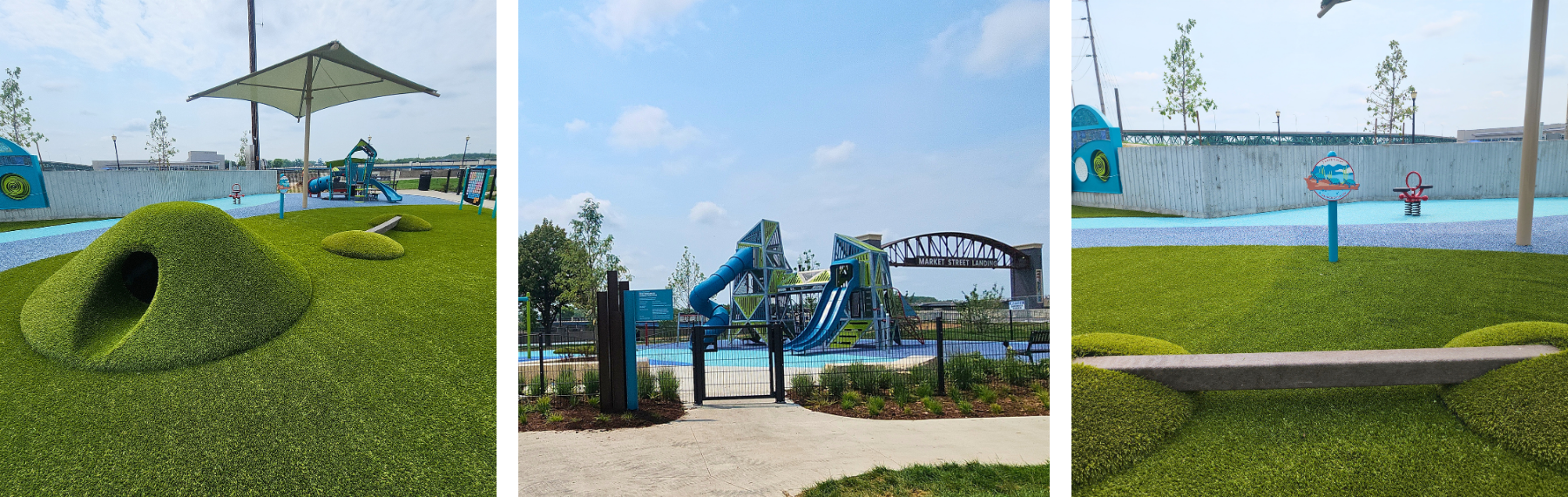
- Example: At the Market Street Landing Inclusive Play Space in Ottumwa, Iowa, making plaques bright blue and ease-edging the finishes was all it took to turn standard signage into fun playground accents.
At The CREW Center in Woodbine, Iowa, are large sculptural letters that spell out CREW. The metal letters are set within the landscaping, and they were custom built with the idea that kids would climb and play on them.
Safety + Wayfinding. Yes, playground signage does need to communicate important rules and help people find their way around the space. In fact, this type of signage is so critical at playgrounds that some states have signage standard requirements for public playgrounds. (Specific regulations vary by state; your signage partner can ensure your signs are compliant with safety codes.)
But safety and wayfinding signage doesn’t have to be boring. Simple design touches can elevate standard signage into a larger cohesive placemaking strategy.
Donor Recognition. Many playgrounds and parks are supported by community donations, and those donors deserve recognition. When people see all the ways their neighbors have invested in their community, it can create a sense of hope and pride — and it might even drive more donations.
Your park’s donor sign doesn’t have to be a simple list of names. Thoughtfully designed donor recognition displays turn the park’s aesthetics and themes into works of art that honor patrons and beautify the space.
- Example: One of the most impressive signs at Triumph Park in Waukee, Iowa, is its donor wall. On one side of the concession stand, 6’ letters spell out Triumph on the wall. Vertical aluminum fins standing 2” off the wall and spaced 2” apart run across the face of the sign, creating a cool visual effect. On closer inspection, you’ll see that donor names have been applied to the fins. Below the sign, the major donors are listed on concrete blocks.
The Design-Build Advantage: Mitigating Risk From Concept to Install
Signs at a playground can’t just look nice; they need to perform well too. They need to be safe enough for kids to play on and around, and accessible for people of all abilities. They also need to be durable enough to withstand all exterior elements, from extreme temperatures to tornadoes and blizzards.
PHASE | COMMON CHALLENGE | THE LATITUDE FIX |
Planning | Signage is treated as an afterthought, leading to poor placement or code non-compliance. | Early site visits allow us to evaluate sightlines, sun exposure, and traffic flow before specs are finalized. |
Design | Off-the-shelf signage solutions conflict with park branding, landscape architecture, and accessibility needs. | Signage is custom-designed to fit the space and the brand. Both tactile and Braille copy can be incorporated to make messages accessible for all. |
Manufacturing | Standard sign finishes fade, rust, or peel in harsh weather conditions. | Precision fabrication uses exterior-grade materials, UV-resistant finishes, and anti-graffiti coatings. |
Installation | Improper footings or inefficient hardware cause signs to loosen or sway. | Custom mounting techniques are inspected after installation to ensure structural safety of all signage. |
We’re here to help you create playground signage that’s fun, functional, and accessible.
Contact us early in your project planning phases to discuss the possibilities.
Like what you see?
Get more ideas, design, and inspiration delivered to your inbox on a monthly basis. Sign up for our email, we won’t waste your time!