
6 Tips to Senior Living Signage Success
Alan Parsons, Senior Environmental Graphic Designer & Wayfinder, shares his 6 Tips for Successful Signage with you. Senior Living is unique with many unique spaces with specific uses. Learn where Alan starts and what he pays extra attention to.
Do you fall asleep thinking about Wayfinding?

No? Good, because we do!
Our team enjoy problem-solving ways to make getting from point A to point B (and back again) easier to navigate. Whether it’s on a walk-through with a customer or when I take my kiddos hiking, I’m always thinking about wayfinding.
For senior living design professionals, like architects and designers, signage is just one piece of the puzzle you’re creating. After our team attended the Environments for Aging Conference this year, we started to review projects and think about the unique wayfinding signage challenges. There’s a lot to consider; this is someone’s home but also a caring environment. It’s a place for families to gather, and someone’s place of work. One must consider the needs of unique users, residents, visitors, and staff. Plus you want signs to complement the culture that you’ve worked so hard to design. Signage should help tell your story and speak to the brand and history of the environment. And wayfinding should be predictable and intuitive.
With all those things in mind, here’s:
6 Tips For Signage and Wayfinding Success
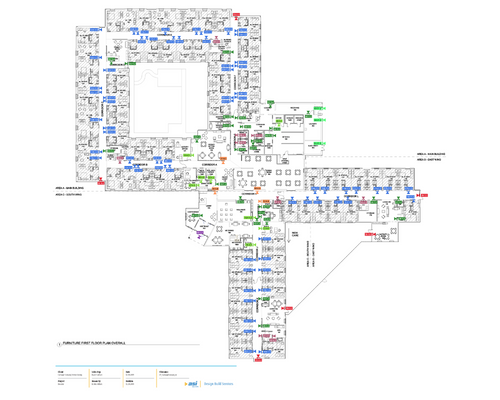
1. Understand the Layout of the Entire Campus
It’s important to talk (and walk) through the layout of the campus with a wayfinding expert. Not all senior living environments are the same. I like to start the conversation by asking questions like, “Who will be using this space? How do we serve their needs? Where are current trouble spots in terms of traffic flow?” These questions begin a dialog that helps us develop a wayfinding system that meets the needs of all the people using the environment.
Some areas, like community rooms and cafes, are more public and will require signage to direct visitors and residents to a space. In other areas residents want the space to feel like they’re at home, not in a hotel or hospital with signs posted everywhere. Areas that offer more skilled care may require more back-of-house signage for team members only.
In all areas, it is important for the signage to be part of an overall family of signage and for those users to feel a sense of belonging. A wayfinding system and the design of its signs can be as in-your-face or discreet as needed, it all depends on the needs of the people using it.
Critically important are the different types of signs that will be required depending on building codes and ADA codes for the area of the property. As signage code experts, we consult, manage, produce, and install signs to satisfy all local codes and federal codes, allowing you to obtain a Certificate of Occupancy (CO) as soon as possible.
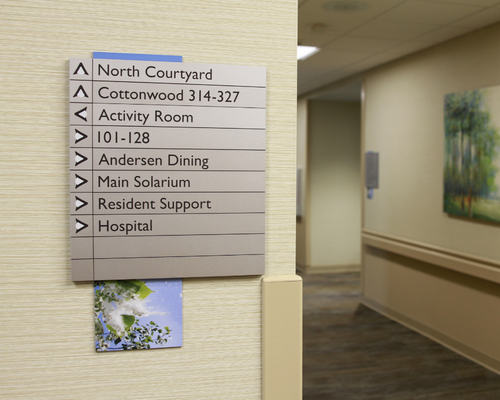
2. Wayfinding Signage is Critical to a Positive Experience
Understanding the culture of an environment is important, and having these conversations early is a key to success. In my mind, one of the most important aspects of a good wayfinding system is that it can provide anyone in any place is a sense of belonging.
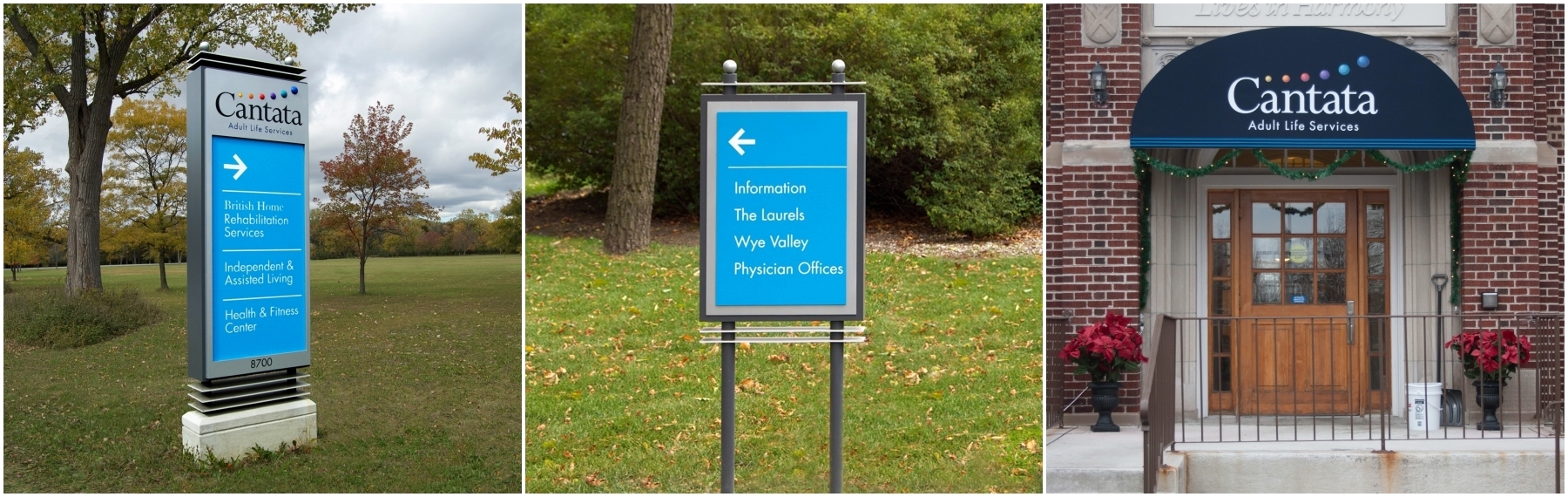
Creating that sense of belonging and fostering a positive experience for visitors, residents, and employees is critical to the success of all senior living environments. Wayfinding is a critical part of crafting a positive experience it’s where first impressions are made. Whether it’s clear exterior wayfinding signage to direct them to one of the multiple entrances or walking directions from the parking lot, wayfinding signage that gets people exactly where they need to go is key to creating that positive experience.
Once inside, wayfinding signage should be placed at each decision-making spot. I recommend wall-mount wayfinding signage in contrast to overhead signage. Wayfinding signs inside need to be placed in predictable spots, as well as consistent ones. In order to do this, it’s important to understand trouble spots, popular intersections, places of congregation, and areas that might be off limits to some individuals. It’s important to understand who is traversing the area and think “How might this person, this age group, this user group move around this space, and where might they look for a sign if they need help?”
3. Wayfinding Includes Team Member Training
Wayfinding works best when everyone (and every sign) speaks the same language. If you remodel a senior living environment and the receptionist at the front desk refers to the memory care entrance as ‘the old main entrance,’ that can be confusing to newcomers. On the other hand, if the team members know that memory care is labeled with a big number 2 by the door, then they can relay that information to guests.
It’s important to plan for each phase of construction, including temporary signage for each area and entrance along the continuum of care. This information needs to be part of team member training, and it’s important to have a reference sheet at the ready to confidently answer questions that arise. This small initiative will pay dividends in the overall experience. It’s important that anyone providing location information over the phone, via email, or on the website can direct guests to key wayfinding landmarks before they arrive or become frustrated.
4. Signage Can Elevate the Culture
Custom signage that complements the culture and the architectural environment elevates the look of the entire space. We work with interior designers and architects to create signage that can carry out a comprehensive feel for the culture and environment. We can match signage to the finishes of the walls, the counters, or another design element so that the signage looks like part of the environment, and not something that was tacked on at the end of the project or ordered through a catalog. In some instances, I’ve created signage that allowed residents to make the signage their own by allowing them to add photos. With other projects, we designed signage to meld with a street scape theme. In other situations signage has been used to help give different areas their own personality while still feeling as though it all belongs within the family.
5. Plan for Future Flexibility
Often the best signage is the signage that offers flexibility. Consider exterior and interior wayfinding signage that includes removable panels or vinyl lettering that can be updated over time without having to replace the entire sign. Allowing for future updates makes it possible to have a consistent signage plan that grows with the environment as it changes over time. It’s much less expensive to change out an exterior face panel on a sign when names or logos change than to update an entire sign. For renovation projects, we often come up with a phased approach to the signage plan that includes temporary wayfinding signage.
Some signage updates can be made by team members or even residents in the senior living environment. For example, room identifiers that include a photo frame, shadow box, or personalized nameplate can be updated with a new image, personal memorabilia, or name printed on paper.
6. It’s Not Always About Signs
Wayfinding is about creating an intuitive and predictable traffic flow throughout a space. And, again, to give people a sense of belonging. There are design elements, other than signage, that you can include in the culture of a senior living environment that will help with wayfinding.
For example, flooring is one design element that can impact traffic flow. In a big open space, changing the flooring style or material between gathering areas, living wings, and traffic areas are visual clues that you are in a walking space or a space for socializing. Carpeting that includes patterns with solid color borders will lead guests as if on a path through the space.
Lighting is another design element that can affect wayfinding. Having a well-lit hallway or walkway sends a non-verbal message that “you are on the right path.”
Tactics like installing lights that dim or turn off completely when not in use deter residents and guests from wandering down service hallways or entering rooms that are off limits. The key is to make sure everything is working together.
Being a creative experiential graphic designer, I often suggest large-scale wall coverings or graphic design elements that provide unique opportunities to help wayfinding where a traditional directional sign might not.
Passionate about positive experiences?
Us too.
Let us help you think through the elements of wayfinding, assist in planning, then design-build and install signage that matches the culture and transcends future needs.
Like what you see?
Get more ideas, design, and inspiration delivered to your inbox on a monthly basis. Sign up for our email, we won’t waste your time!