
A Marketer’s Mindshift: Finding Your Way Through Wayfinding Signs
“Back in my 20s, I had a big shift in how I observe and think about signs. Then in my 30s, another shift in my mindset affected my job as a marketer.”

ABOUT THE AUTHOR: Rhonda O’Connor, CEO of Getting Gritty. Rhonda O’Connor is tenacious about getting results. She loves to formulate strategies and execute on them, so she started her own company, Grit Marketer, to help others get the job done right and achieve reliable results.
Links: LinkedIn Profile
Back in my 20s, I had a big shift in how I observe and think about signs. Then in my 30s, another shift in my mindset affected my job as a marketer. I have a long history of being a team player who’ll do anything to get the job done.
However, sometimes a good marketer must set her ego aside and realize that just because she can design a sign, doesn’t mean she should. Luckily my ego was small enough to shift out of the way and let experts step in and make me look good.
This is my story about finding my way through wayfinding signs.
Wayfinding signs make sure you can find a bedridden friend at the hospital, tour a college campus with your high school senior, interview at a corporate headquarters for a job opportunity or race through an airport to get to your gate on time.
I remember clearly when one of my colleagues explained what “wayfinding signs” were. She and I were discussing common challenges for an upcoming renovation project for a community hospital, and she mentioned that “wayfinding signs” were a common challenge.
I asked, “What are wayfinding signs?” I had never heard the term “wayfinding”, and Google didn’t exist back then.
So my colleague explained how these type of signs exist in our everyday lives, and how the majority of us take them for granted. When they’re done well, you don’t notice them. When they’re done poorly, you don’t even realize they’re the problem.
What Are Wayfinding Signs?
Wayfinding signs are a series of signs that provide directions to navigate a city or large complex. Think about when you enter an airport. You look for your airline (unless you check-in ahead of time), then you look for your terminal and then your gate. Then you wait. And if you’re like me, you backtrack to the nearest Starbucks.
You successfully find your gate because a sign planner had the expertise and experience to know where and when to place signs, which helped you navigate the minute you got out of your Lyft or Uber to your final destination.
I spent the first 30 years of my life taking these signs for granted. After my newfound appreciation, I started taking note of how well they’re done – and when they’re not.
Wayfinding Signs Create a Friendly User Interface (UI) for In-Person Customers
If you are like the majority of people, you don’t like to ask for directions. These signs allow you to avoid asking for help and interacting with strangers. They make you feel confident and smart because you were able to navigate to your destination all on your own.
The same holds true for a website or software solution that provides a 5‑star user experience and user interface (UX/UI). When you can easily navigate a website or intuitively pick up a new software, you just feel smarter and fall in love with the product. The opposite is true when you can’t. You are irritable and impatient. You do not love the product or experience.
If you are like me, I worry about keeping up with technology trends. When I come across one that isn’t easy to use, I feel stupid. When wayfinding signs are done poorly, that’s how I feel. Or how I used to feel. Now, I know to blame poor signage.
Everyone understands the value of making an amazing first impression with a website. However, modern marketers are forced to keep up with evolving technology and trends to create that positive virtual experience. Navigating a college campus using wayfinding signs provides the same set of challenges that navigating a website entails.
Hiring knowledgeable experts to design and build an intuitive navigation experience is critical to bringing website visitors back and converting them to customers. The same is true for wayfinding signs. Imagine a high school senior visiting a college campus with her parents. Feeling lost and confused is not a good first impression.
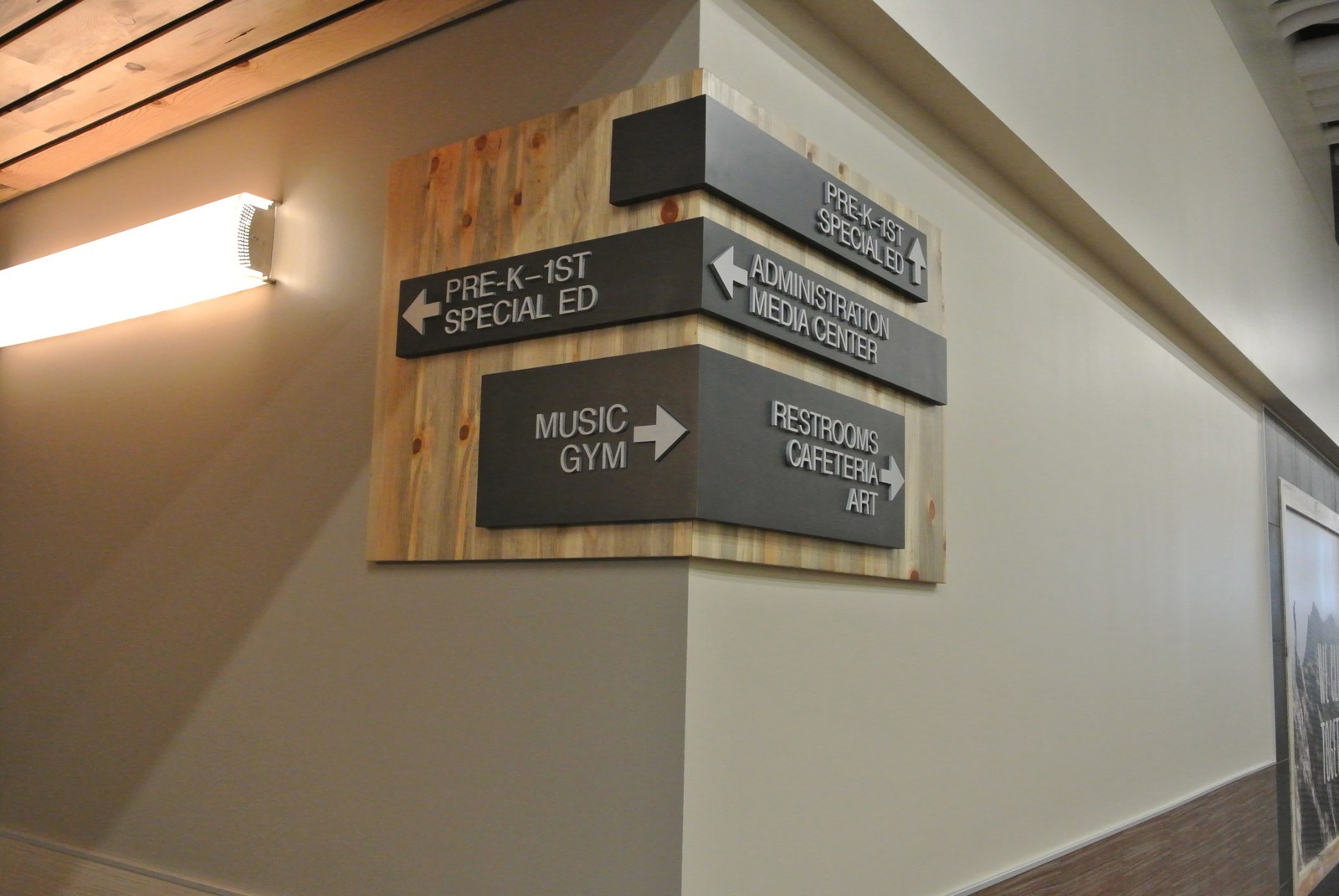
Putting Up a Stop Sign for Sign Requests
As a marketer, it’s valuable for us to draw a distinction between signs and wayfinding signs because we are typically the people who get asked to design or order signs. We are the brand standard police, making sure our colleagues don’t distort the logo, use the wrong font or apply the wrong RGB swatch.
The request to design a sign is often triggered by a bad customer experience in hopes that slapping up another sign will resolve the issue. In reality, it just exacerbates the problem.
At one of my previous positions, this happened over and over. I was not in charge of making or ordering the signs at the time. However, I suggested we bring in sign experts, and then shared my story of how I first learned about wayfinding signs.
My suggestion was so well-received that I was placed in charge of selecting and hiring a company to comprehensively review, plan, design, and implement wayfinding signs. No good idea goes unrewarded, right?
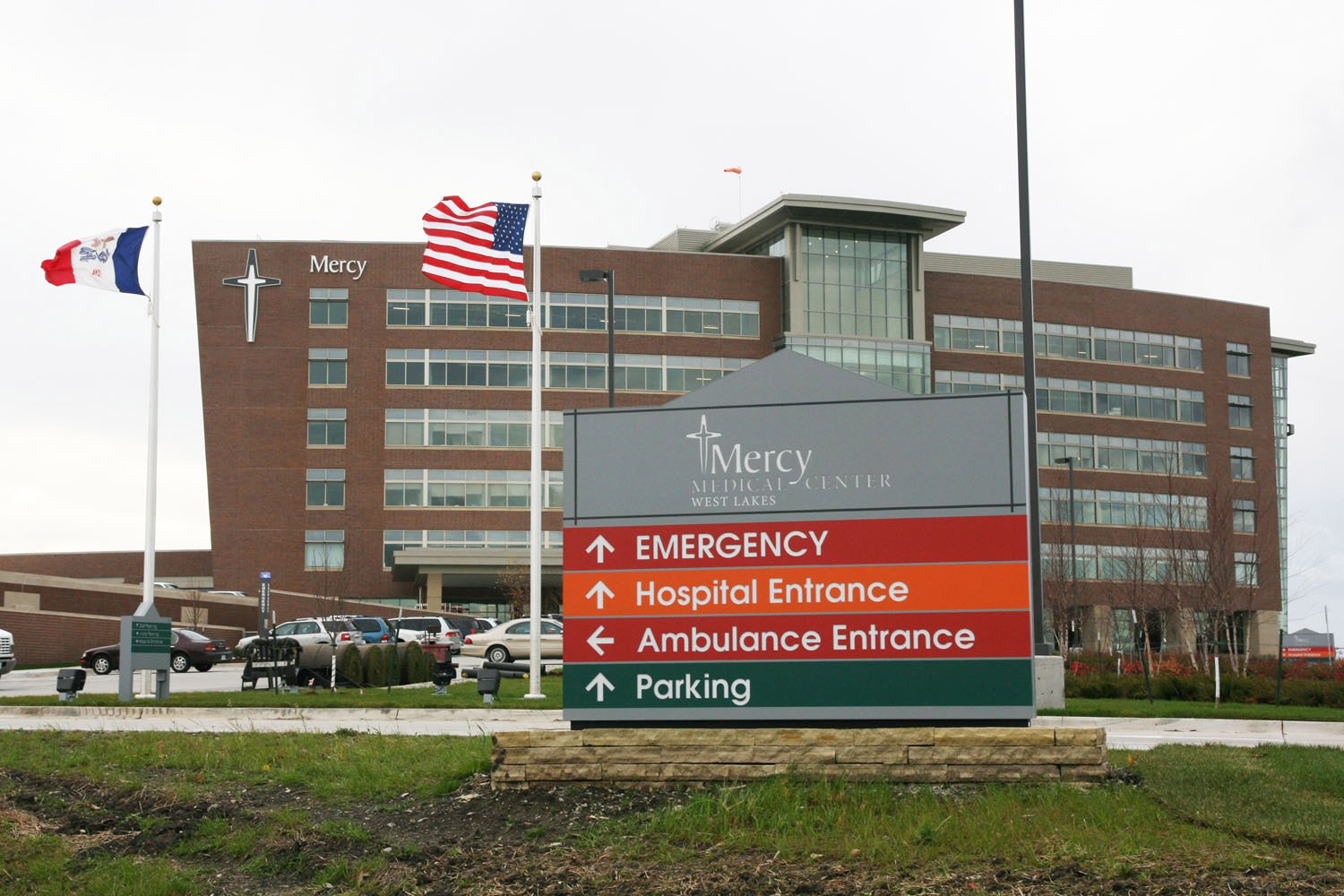
Top Six Takeaways
While I created work for myself, I gained an even greater appreciation of sign planning and design. Here are the Top Six Takeaways I learned in managing this process.
- Sign Type Selection: There are countless sign types for your budget, and you’ll need a variety of them based on your location. For example, does it need viewed at night? How can you best light it? Having a vendor who is up-to-speed on the latest technology can help you select the right sign type for your budget.
- Location, Location, Location: You have to deliver information at just the right time. When you are driving, it is essential to know that 30 feet ahead you’ll need to turn left. A sign engineer knew to place a directional sign that cues you to get ready for that turn. Then, when you are at the turn, there is another variation of that sign telling you to turn. Who knew we were so needy?
- Typography: Marketers know typography is very important to convey the brand. However, for wayfinding signs, it’s about readability as you are driving or walking up to a sign. How large does the copy need to be to be legible from 30 feet? San Serif fonts are better than serif, and while you might think ALL CAPS is bigger, bolder and better, it’s easier to read when someone can distinguish letters using Initial Caps.
- Multi-Language: For my project, we needed to replace English and Spanish signs. However, after conducting interviews with staff members who dealt with customers face-to-face, we realized there were several other languages, as well as illiteracy challenges. So instead of creating multi-language signs, we leveraged icons and colors.
- Icons and Pictographs: Icons and pictographs were developed to help customers navigate the site. Having external experts bring a fresh perspective for icons and images is essential for success. Often, companies have their own lingo, acronyms and icons that may not make sense to outsiders. Having an outside perspective and an authority on the subject is critical for developing or selecting the right images to convey the best meaning.
- Color Conveys Meaning: We all know red means stop and green means go. Some may even know that yellow is commonly used for warnings. But when it comes to signs, there are universal colors to help. For example, a parking sign is often blue. Your signs can leverage universal color schemes that your visitors don’t even realize they intuitively know.
For me, having relied on the expertise of Latitude Signage + Design provided invaluable lessons and led to improved traffic flow. After we completed the main location and it was viewed successfully by staff and customers, our leadership budgeted to have five other sites redone. We also won a communication award for the project.
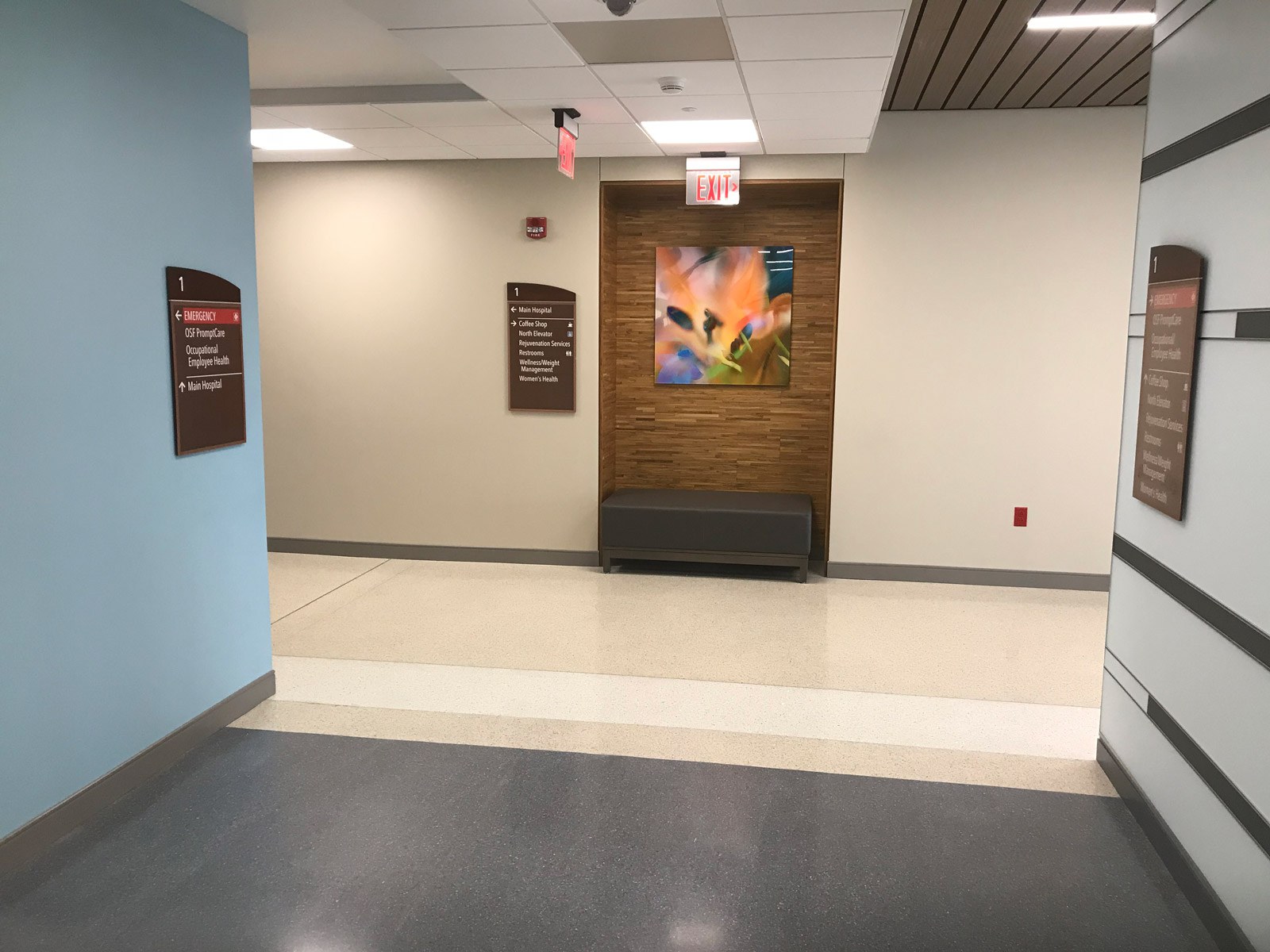
How to Sell Outsourcing Wayfinding Signs
I worked for some great leaders who understood the value of hiring experts. However, I do understand how hard it can be to suggest outsourcing a project when it feels you have in-house designers with capacity.
If you have an upcoming project or field requests to, “Make a sign”, here are some suggestions for selling the value of outsourcing the work.
- Use the “5 Whys” process to determine the root cause for why a sign is needed. What triggered the need for this sign? Does the sign really solve the problem or just make someone feel like something was done?
- Ask them about a time they successfully or unsuccessfully navigated an airport, hospital or college campus.
- Communicate that there is a “science” to it, and as much as you are an expert in certain aspects, you are smart enough to know when to bring in a sign expert.
- Think ahead and budget for signs. If you can build a case (and budget) for how it will improve customer service, you can proactively solve the problem vs. scrambling to find money for an unbudgeted line-item.
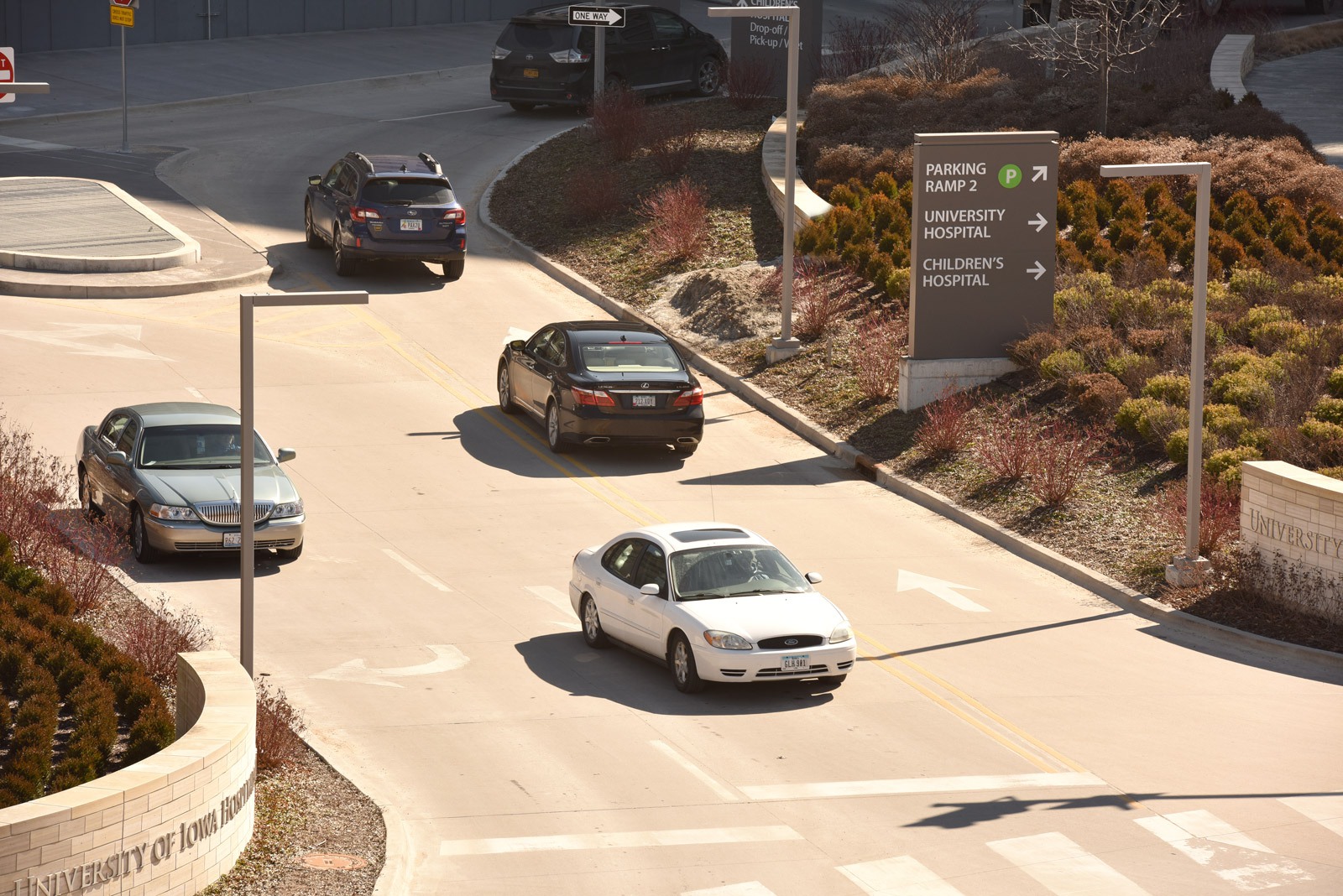
Become the In-House Expert
If you have amazing in-house designers, you may want to refrain from outsourcing this type of project. However, it’s important to check your ego at the door. While I didn’t do the design work, I managed the project, learned the science of signs and improved traffic at five locations, thus improving customer service and many first impressions. I became the in-house expert who knows some things need to be handled by an outside expert.
Like what you see?
Get more ideas, design, and inspiration delivered to your inbox on a monthly basis. Sign up for our email, we won’t waste your time!