What Is a Projecting Sign? 4 Tips to Great Projecting Signage
Summary: A projecting sign (or blade sign) is a double-sided display mounted perpendicular to a building façade to maximize multi-directional visibility. Get design and engineering tips for successful implementation, including optimizing vertical brand assets, leveraging double-sided real estate, scaling for elevated sightlines, and strictly factoring in wind loads and local municipal sign codes.
Why do we consider projecting signs to be one of the highest-ROI investments for commercial storefronts, boutique hotels, and urban districts? Let’s break down the definition, benefits, and best practices for implementing this high-impact signage type.
Defining the Projecting Sign
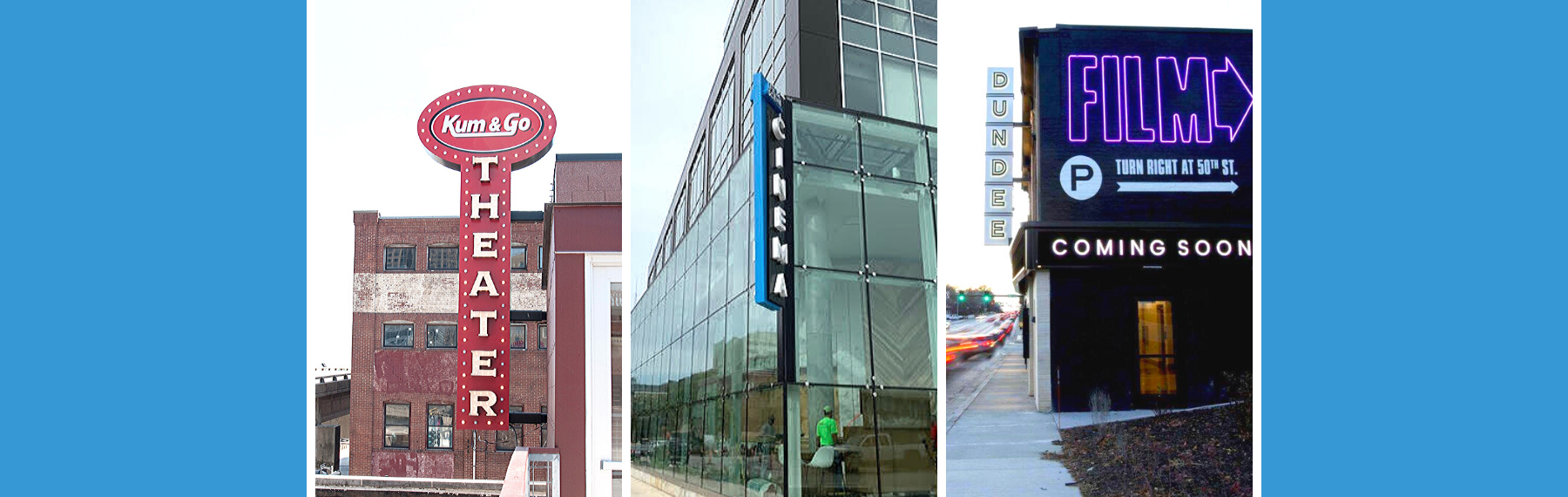
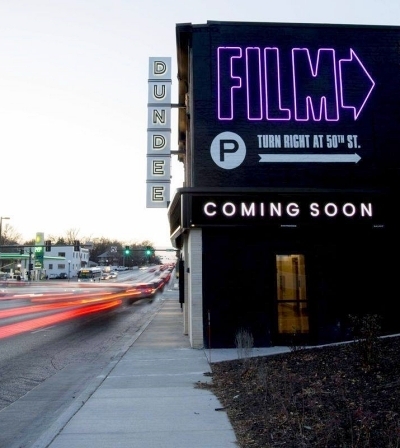
A projecting sign, also known as a blade sign or a flag-mounted sign, is a double-sided display mounted perpendicular to a building’s exterior façade or interior corridor wall.
Unlike standard flat fascia signs that can only be read from directly across the street, a projecting sign protrudes directly into the sightline of oncoming traffic. This allows your brand assets, logo, and wayfinding messaging to be easily viewed from two directions simultaneously.
Why We Love Projecting Signs:
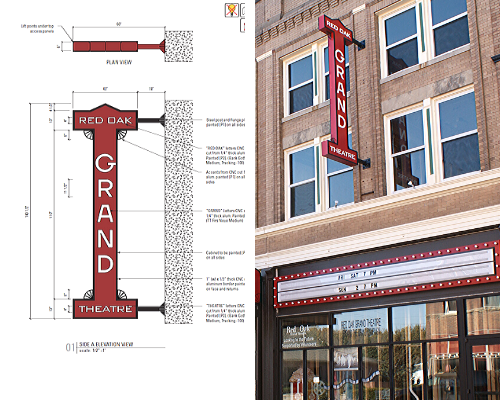
- Maximized sign real estate: Because they are double-sided, they offer double the branding space.
- Pedestrian wayfinding: They act as natural visual anchors for foot traffic navigating city sidewalks or multi-tenant retail spaces.
- Aesthetic flexibility: They adapt seamlessly to both modern, illuminated corporate structures and historic architectural preservation districts.
4 Expert Tips for Designing and Installing a Great Projecting Sign
Because projecting signage introduces distinct structural and visual variables, successful implementation requires a blend of precise environmental graphic design and rigorous engineering.
1. Optimize Your Visual Assets for Vertical Design Orientations
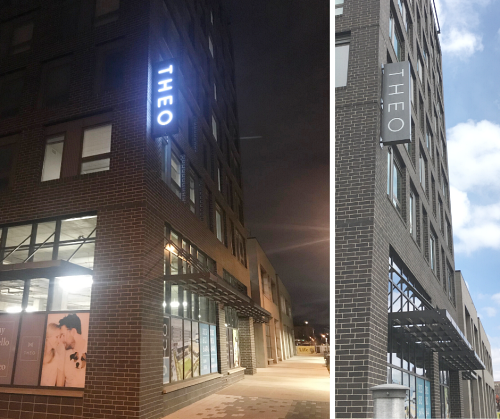
Most blade signs feature a tall, slender, or vertically oriented footprint. Because of this restricted width, horizontal corporate logos or long business names cannot simply be copied and pasted onto the face.
- Tip: Purposefully adapt your brand assets for a vertical layout. As your design team, we’ll experiment with stacked typography or isolated brand icons. We’ll make sure clarity dictates your layout.
2. Use Double-Sided Real Estate for High-ROI Visibility
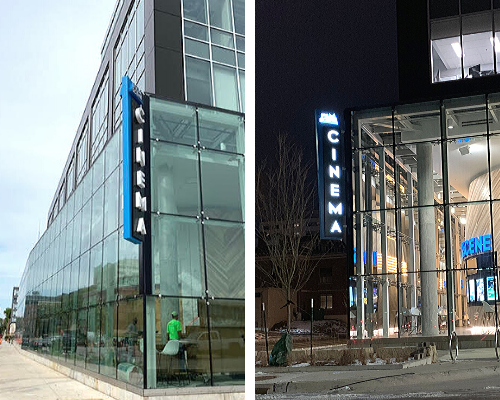
A projecting sign excels at capturing two distinct audience segments: pedestrians on the sidewalk and drivers on the road.
- Tip: Take advantage of both faces and make them cohesive but unique. While side A might feature your primary logo for oncoming vehicle traffic, side B can feature sub-branding or directional indicators for approaching pedestrians.
3. Factor in Sightlines, Mounting Elevation, and Scale
Because blade signs are installed high up on a building face (typically at least 8 feet above the sidewalk to comply with municipal pedestrian clearance rules) they have a massive viewing distance.
- Tip: Standard letter sizes that work on a window graphic will disappear when elevated on a building exterior. We’ll scale up your copy, use high-contrast color palettes, and expand your graphic elements so they maintain crisp readability from a distance.
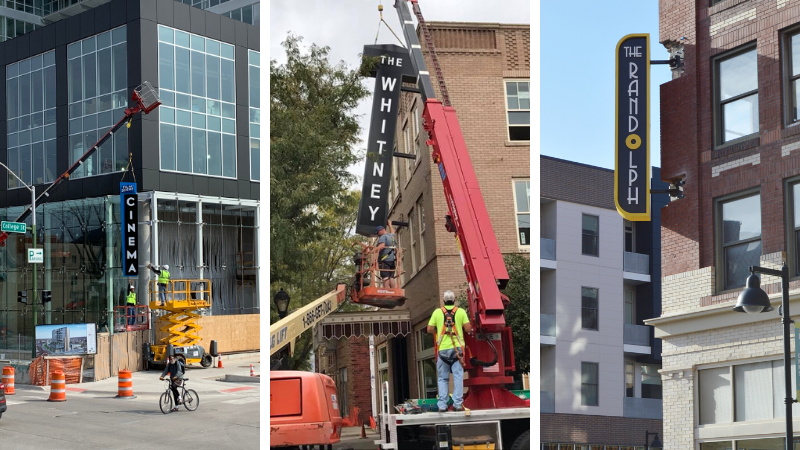
4. Account for Structural Engineering, Wind Loads, and Local Code
Because a flag-mounted sign sticks out from a wall, it functions like a sail in heavy weather. Wind loads affect projecting signs dramatically because the force pushes directly against both sides of the panel.
- Tip: Don’t attempt a DIY installation. Our expert installers will do pre-install site visits to analyze the wall structure and ensure brackets can tie directly into the structural studs or steel framework of the building. Many busy commercial zones require structural engineering seals, temporary street-blocking permits for boom trucks, and strict adherence to regional sign code allowances. We’ll help you navigate all of it.
Partner with Local Signage and Compliance Experts
With proactive planning, precise production design, and expert installation, a projecting sign delivers the ultimate bang for your buck by turning a flat storefront into a multi-directional landmark.
Contact our Design-Build signage experts today to talk about projecting sign solutions.
Projecting sign examples:
Like what you see?
Get more ideas, design, and inspiration delivered to your inbox on a monthly basis. Sign up for our email, we won’t waste your time!