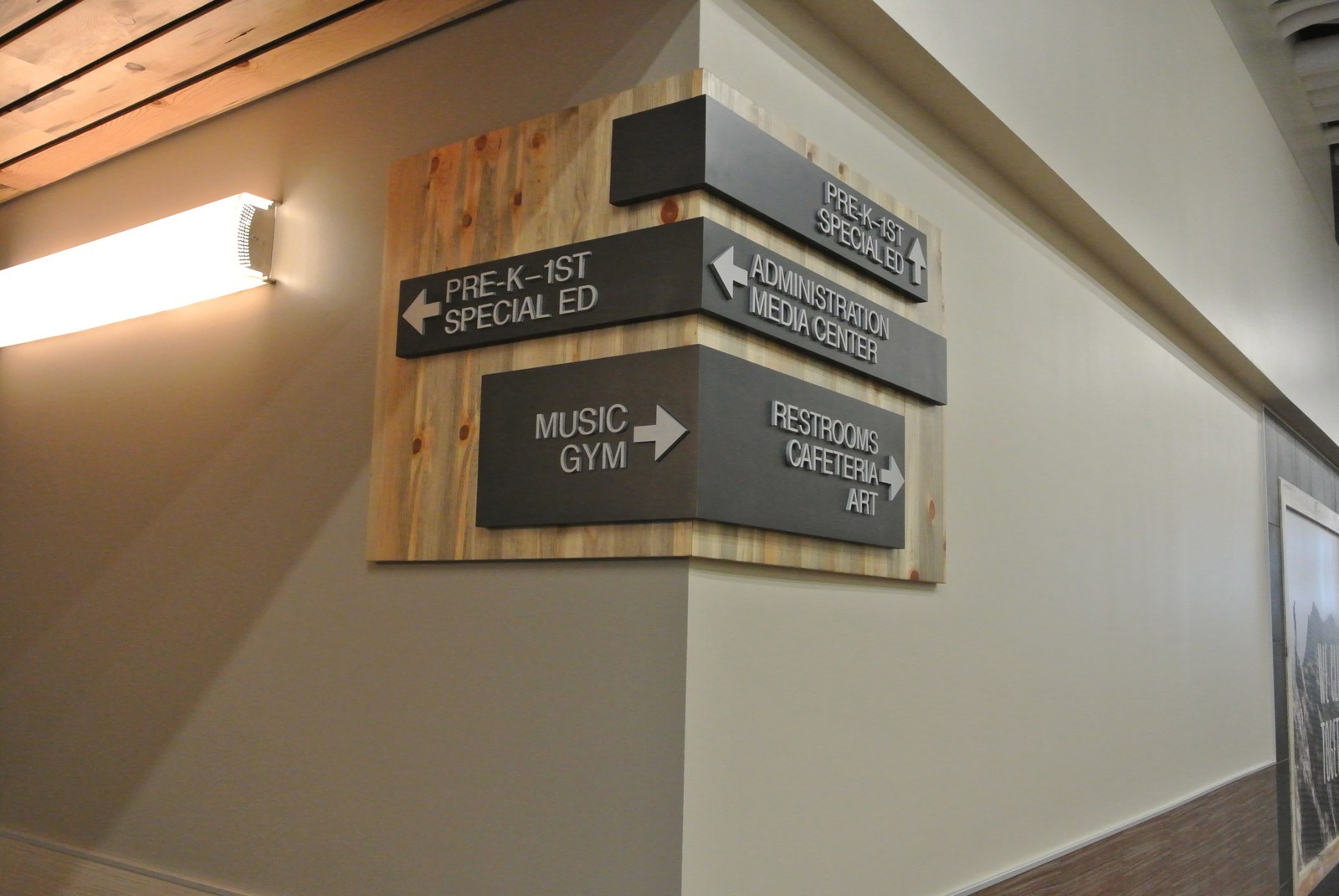
Is There A Way to Measure Wayfinding Effectiveness?
We recently received this interesting question on Wayfinding from an architectural partner and thought we would dig into this a bit. Leaning on our EGD team, here’s our take and 3 ideas to measure.
What IS Wayfinding?
Wayfinding is defined as “ the process or activity of ascertaining one’s position and planning and following a route.” — Oxford
According to the Society for Experiential Graphic Designers “Wayfinding refers to information systems that guide people through a physical environment and enhance their understanding and experience of the space.”
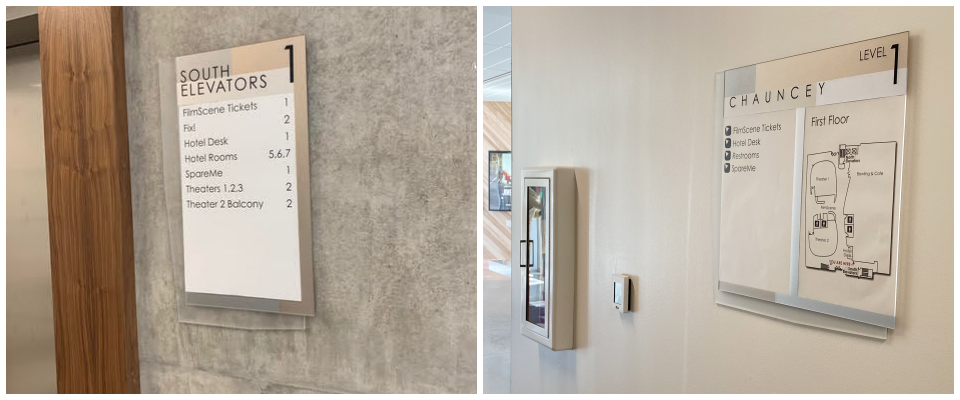
How Do You Measure Wayfinding Effectiveness?
Our team has assisted thousands of clients on planning and wayfinding strategies for their environments both interior and exterior. Recently, one of our architecture firm partners asked us this question:
I hope you don’t mind, but you are always my ‘go to’ for signage questions and information. We were asked a question by one of our clients – is there a way to measure Wayfinding Effectiveness?
We asked Alan Parsons, our Senior Experiential Designer & Wayfinder. Here’s what he had to say:
Other than books that I’ve read in college, and surveys I did while completing my thesis, providing a lot of examples discussing methodologies to wayfinding (including my own thesis), a lot of what we do is based on experience along with understanding the specific environment and customer needs. What might work in one facility might not work in another and this can be due to architecture or layout, but also the culture of people using the space.
Most research and my own experience would encourage good discourse with the end user, possibly surveying, watching traffic flow, asking people questions who navigate that space. When I did my thesis, part of it was to collect quantitative evidence to negate or lend credence to my hypothesis. This meant I created a survey about navigating a specific space and asked questions to people using that space. Now, this was a student’s work at a university and would differ from the corporate world but typically this is one of the only ways to collect and present data on how a current system works. From understanding that then it would be our experience as wayfinders that would play a role in presenting alternatives. But, I would always stress the importance of the process. Even after implementation, it’s important to understand that a system might need to be updated or changed throughout its existence.
3 Ideas to Measure Wayfinding Effectiveness
- Conversations with experts in the environment and educating visitors. Talk with the front desk, customer service desk or representatives, volunteers, escorts, etc.
- Survey the users of the environment. Understanding the differences between first-time users and everyday users is important. First-time users are key to understanding the effectiveness of the wayfinding system.
- Set up a place for feedback, like a form or anything that is easily accessible. Here, employees can share feedback from guests on regarding experiences. Look for repeating issues before making big changes.
Need help analyzing or understanding the Wayfinding of your environment? We can help! Find your expert here.
Here are some great SEGD resources:
Wayfinding’s Return on Investment: Five Facts
A Framework for Evaluating Wayfinding System
See Wayfinding signage in the wild:
The Process: 6 Tips to Wayfinding Success.
Like what you see?
Get more ideas, design, and inspiration delivered to your inbox on a monthly basis. Sign up for our email, we won’t waste your time!