Transforming Spaces and Creating Experiences with Placemaking
Summary: Placemaking is a strategic design approach that transforms public spaces into meaningful destinations by prioritizing the human experience. While traditional design focuses on infrastructure, placemaking uses artistic signage, unique materials, and cultural branding to create a distinct sense of place. By blending aesthetics with community identity, it turns generic locations into destinations that foster social interaction and emotional connection. Ultimately, it’s about creating a vibe that makes a space memorable rather than just functional.
Placemaking vs. Wayfinding
Placemaking often gets confused with wayfinding signage. While placemaking focuses on creating engaging spaces that build a sense of identity within a community, wayfinding is the process of guiding people through a space. Placemaking might be an art installation or a monument sign in a community garden. Wayfinding signs are often maps, arrows, and other visual cues guiding people through an airport, hospital, or other large campus.
The two are often intertwined with each other. A placemaking project may include wayfinding elements so people can feel a sense of place and navigate within it. Similarly, well-designed wayfinding systems help create a space’s sense of identity.
Feature | Placemaking Signage | Wayfinding Signage |
Primary Goal | Build community identity and sense of place. | Guide people efficiently through a space. |
Common Examples | Landmark monuments, art installations, branded murals. | Maps, directional arrows, ADA room IDs. |
Emotional Impact | Creating a vibe or aesthetic experience. | Minimizing confusion and stress. |
High-Impact Placemaking
Think about some of your favorite places to go – libraries, shops, parks, and apartment complexes. Now imagine what those places would look like without their signs. The design, colors, and materials that go into a signage plan help brand a space and give visitors a vibe, a feeling, that sets the tone for what they’re about to experience.
5 Case Studies in Placemaking
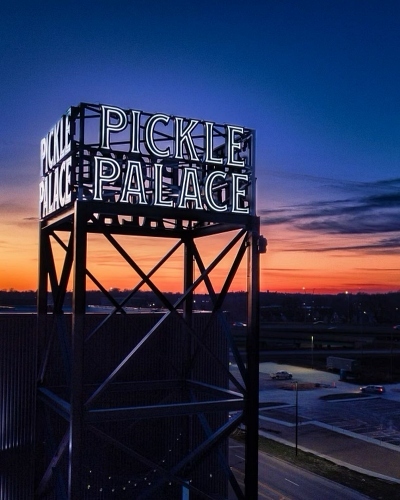
Entertainment: Pickle Palace | Cedar Rapids, Iowa
The new pickleball courts are also home to a multi-level, indoor/outdoor restaurant, event, and recreation venue that hopes to revitalize Cedar Rapids, Iowa’s southwest side. Uniting all the elements of the social space under one brand with placemaking was paramount to building an experiential environment befitting of the name Pickle Palace.
Key Feature: A 42-inch tall four-sided scaffold sign that serves as a skyline landmark.
Technical Detail: Interior duckpin bowling areas utilize 36-inch open channel letters with exposed incandescent LED bulbs to achieve a nostalgic aesthetic.
Science & Tech: Element Research Center | Boulder, Colorado
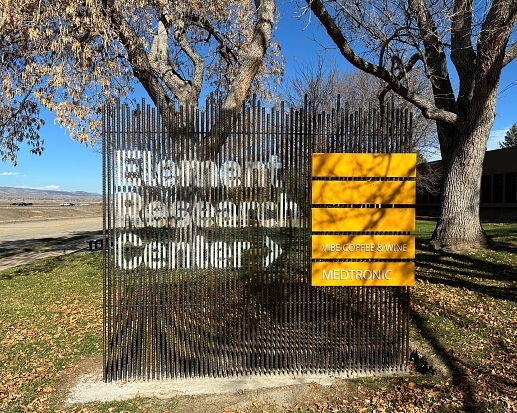
The new seven-building Element Research Center — a science and technology campus featuring offices, lab spaces, and numerous amenities — required extensive signage to help visitors navigate the property and create a cohesive look and feel across its 453,565 square feet.
Material Innovation: Use of heavy rebar in exterior signage manufacturing to create an industrial, high-tech feel that resonates with biotech and research organizations.
See the complete Element Research Center signage project here.
Healthcare: Community Alliance | Omaha, Nebraska
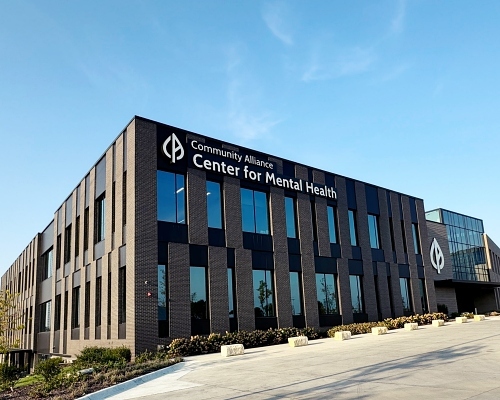
In medical settings, placemaking is used to reduce patient anxiety by creating a sense of peace. Community Alliance, an Omaha, Nebraska, healthcare organization, recently opened a 127,700-square-foot facility with multiple entrances over an expansive property.
Strategy: Large-scale monument signs needed to provide high visibility from busy streets without feeling loud or overwhelming. Text needed to be large enough for people to read from far away.
Execution: The final signage plan uses all the square footage available to build a cohesive visual brand and provide campus navigation. Oversized monument signs can’t be missed from the busy Omaha streets, ensuring visitors spot the campus as they approach.
See the complete Community Alliance signage project here.
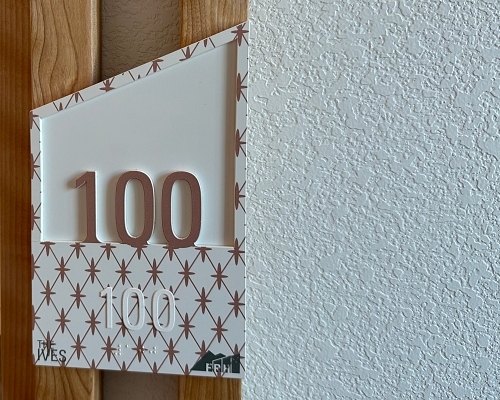
Residential: The Ives | Denver, Colorado
In the competitive Denver housing market, placemaking provides instant vibes to attract specific demographics.
The Ask: Create a modern, upscale look across all signage, including ADA signs.
The Answer: Unique patterns and colors to make each floor look and feel different was carried through to room identification and other permanent signage. The dual signs approach enabled creative design freedom while ensuring ADA compliance. Exterior signage with bottom-mounted, illuminated letters stacked on top of each other create a striking canopy at the entrance of The Ives.
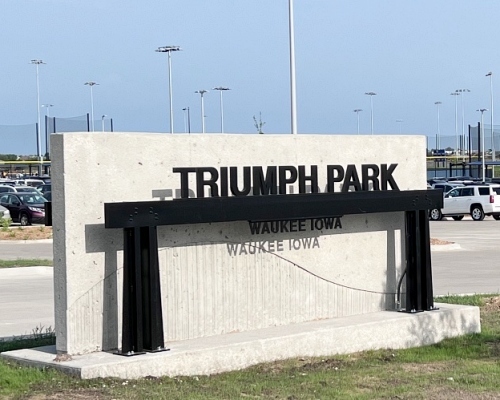
Recreation: Triumph Park | Waukee, Iowa
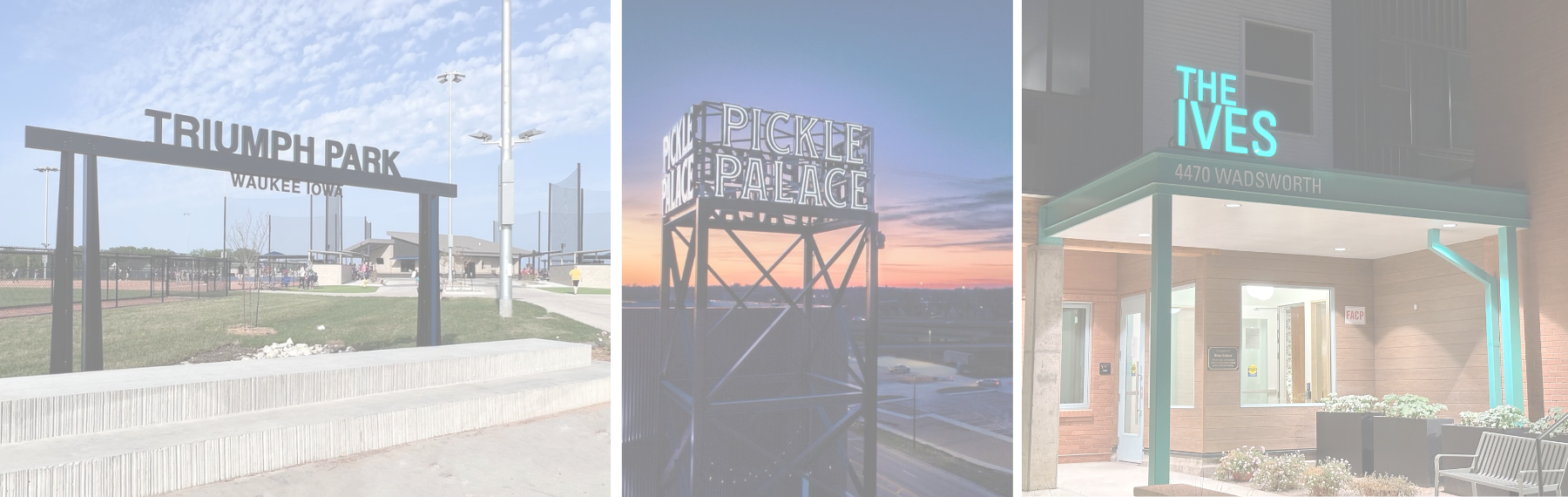
Spanning 66 acres, this park uses signage to visually unite 12 athletic fields and an 11-acre pond.
Signature Look: Fabricated aluminum letters sitting on black aluminum trestle-style structures throughout the park that can be used to welcome visitors and take team photos after winning the big game.
Visual Texture: A donor wall using vertical aluminum fins creates a kinetic visual effect for pedestrians. Flag-mounted directional signs and field markers complete the look and help people identify key locations from far away.
3 Key Placemaking Tips
Placemaking creates environments that empower visitors to get a feel for your organization. Here are some keys to placemaking success:
Consult Early: Involving a signage partner during the architectural phase ensures placemaking elements are integrated into the building’s “bones.”
Prioritize Function: Even the most creative placemaking must adhere to ADA compliance and legibility standards.
Material Matters: The choice of rebar, aluminum, LEDs, and more helps create the feeling (industrial vs. warm) of the space.
Ready to define your space? Contact our experts at connect@latitudesignage.com to start your placemaking strategy.
All about wayfinding:
Is there a way to measure wayfinding effectiveness?
How wayfinding can help improve campus traffic – Iowa Central Community College case study
Like what you see?
Get more ideas, design, and inspiration delivered to your inbox on a monthly basis. Sign up for our email, we won’t waste your time!